
Sublimation Printing
Full history + how it actually works (simple, no fluff)


What is sublimation printing
Sublimation is a printing method where solid ink turns into gas with heat and bonds permanently with a polymer-coated surface. No liquid stage. The print goes inside the material, not on top of it. That’s why it never peels or cracks.
Short History (real timeline)
- 1950s – Scientists discover the sublimation process in chemistry
- 1957 – First industrial sublimation dyes developed
- 1980s – Used in textile and industrial marking
- 1990s – Digital sublimation printers appear
- 2000s–Present – Becomes popular for mugs, T-shirts, plates, phone cases, photo gifts
Today, sublimation is the backbone of custom gifting and promotional printing.
Where sublimation works (important)
Sublimation works ONLY on:
- Polyester fabric (minimum 60%, best 100%)
- Polymer-coated items like:
- Ceramic mugs
- Metal photo sheets
- Keychains
- Phone covers
- Tiles
❌ It does NOT work on cotton, wood, glass (without coating).
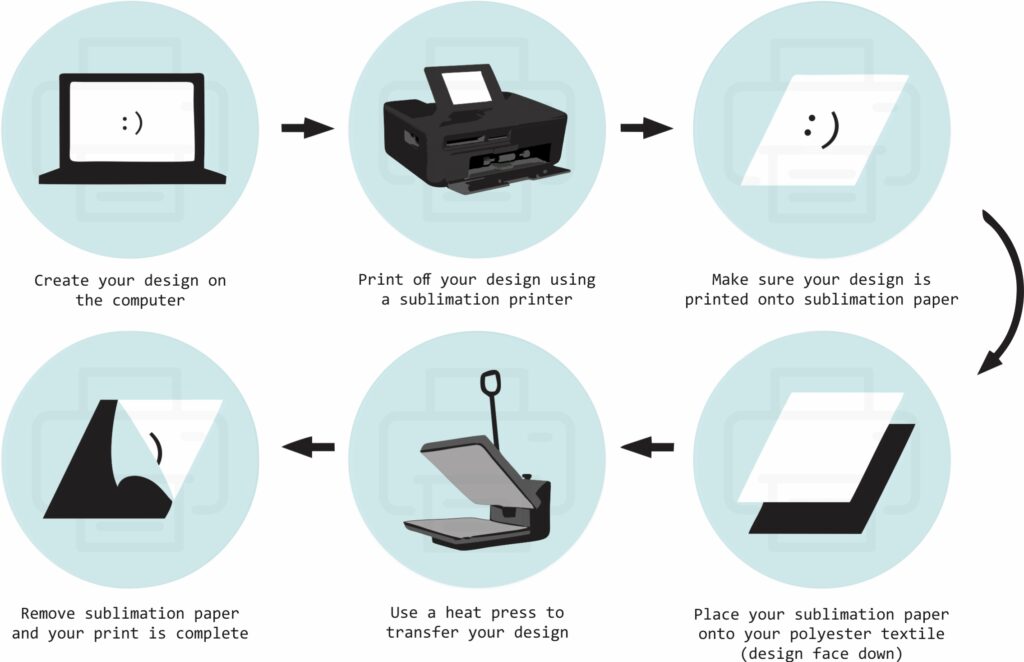
How sublimation printing works (step by step)
Step 1: Design
- Create design in CorelDRAW / Photoshop
- Mirror the image (very important for mugs & T-shirts)
Step 2: Print
- Use sublimation ink
- Print on sublimation transfer paper
- Printer example: Epson (converted for sublimation)
Step 3: Heat Press
- Place paper on product
- Apply heat & pressure
Standard settings (guide):
- Ceramic Mug: 180–200°C | 180–240 sec
- T-Shirt: 190–200°C | 30–40 sec
Step 4: Transfer
- Heat turns ink into gas
- Ink penetrates polymer coating
- Remove paper after pressing
Result: Permanent, washable, scratch-resistant print
Why sublimation is so popular
- Print never fades
- No cracking or peeling
- Photo-quality results
- Zero hand-feel
- Ideal for gifting & branding
That’s why mugs, photo frames, and corporate gifts rely on it.
Basic equipment needed
- Sublimation printer
- Sublimation ink
- Sublimation paper
- Heat press machine (mug press / flat press)
- Polymer-coated blanks
Common mistakes beginners make
- Using normal ink ❌
- Printing on cotton ❌
- Forgetting mirror print ❌
- Wrong temperature/time ❌
- Low-quality coating ❌
Avoid these and you’re good.
If you want, I can:
- Explain sublimation mug printing only
- Give exact settings for Indian climate
- Share a starter setup under budget
- Help you price sublimation products for business (perfect for Novotech Print)
Just tell me what you want next.

Just signed up for OK3655. The interface is pretty slick so far. Putting a small amount in to test the waters. Wish me luck! Will report back on how it goes. ok3655